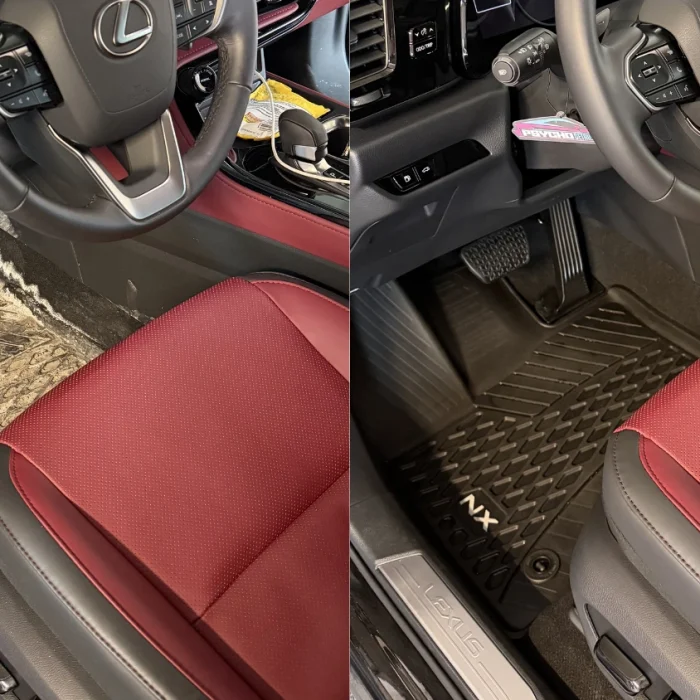
Interior Detailing: How to Remove Winter Salt & Calcium From Your Car
Winter is hard on your car's interior. Every time you get in, you bring salt and slush with you. Over time, this builds up on your carpets and seats. The result? White stains, bad smells, and permanent damage. In this guide, we'll show you how interior detailing fixes these problems. We'll also share tips to keep your cabin fresh all season.
Why Your Car's Interior Needs Detailing After Winter
Quebec winters create the perfect storm for interior damage. Your boots act like sponges — they soak up salt from sidewalks and parking lots, then transfer it straight onto your floor mats and carpets.
Here's what happens inside your car each winter:
🧂 Salt and Calcium Buildup
Road salt contains calcium chloride, which leaves white, crusty stains on carpets. The problem is that salt doesn't stay on the surface. Instead, it soaks deep into the fibers, so vacuuming alone won't remove it.
💧 Moisture and Mold
Snow melts inside your car, and this creates a damp environment. Over time, moisture gets trapped under floor mats. As a result, mold and mildew start to grow. If you notice a musty smell that won't go away, that's a clear sign of moisture damage.
👢 Dirt and Debris
Winter boots track in more than just salt. Sand, gravel, and mud come along too. This debris grinds into carpet fibers over time, which causes permanent wear and fading.
Signs Your Car Needs Interior Detailing
Not sure if your interior needs professional help? Here are the warning signs to look for:
White Stains on Carpets and Mats
Check your floor mats first. If you see white, chalky marks, that's dried salt and calcium. These stains get worse if left alone because the chemicals keep breaking down the carpet fibers.
Musty or Damp Smell
Pay attention to how your car smells. A musty odor usually means trapped moisture, and mold may be growing under your carpets or seats. This is also a health concern, especially if you have allergies.
Stiff or Crunchy Carpet Texture
Touch your carpets. If they feel stiff or crunchy, that's salt residue hardening in the fibers. At this point, our professional interior detailing service is the only real solution.

What Is Interior Detailing?
Interior detailing is a deep cleaning process for your car's cabin. It goes far beyond a quick vacuum and wipe-down. Here's what professional interior detailing includes:
- Deep extraction — Hot water is pushed into carpets, then sucked out along with dirt and salt
- Leather care — Removes grime and restores moisture to prevent cracking
- Dashboard cleaning — Cleans every vent, button, and crevice
- Odor removal — Kills smells at the source, not just masks them
- Fabric protection — Adds a barrier to block future stains
In short, interior detailing restores your cabin to like-new condition while also protecting it against future damage.
How Professional Interior Detailing Removes Salt and Calcium
Removing winter salt takes special equipment and know-how. Here's our interior detailing process step by step:
Step 1: Thorough Vacuuming
First, we remove all loose debris — sand, dirt, and surface salt. We vacuum every inch of the interior, including seats, carpets, trunk, and crevices. This prepares the surfaces for deep cleaning.
Step 2: Pre-Treatment of Salt Stains
Next, we spray a salt neutralizer on affected areas. This breaks down calcium chloride at the molecular level, so the white stains loosen from the carpet fibers. Regular cleaners can't do this effectively.
Step 3: Hot Water Extraction
Then we use professional extraction equipment. Hot water and cleaning solution shoot deep into the carpet, and a powerful vacuum immediately pulls everything back out. This removes salt, dirt, and moisture from the fibers. It's the most effective method for interior detailing.
Step 4: Drying and Deodorizing
After extraction, we speed up drying with air movers. This prevents mold from growing. We also apply odor neutralizers to eliminate any remaining smells, so your car smells fresh — not like chemicals.
Step 5: Protection Application
Finally, we apply fabric protector to carpets and seats. This creates an invisible barrier, so future spills and salt bead up instead of soaking in. As a result, your next interior detailing will be much easier.
💡 Pro Tip: For leather interiors, we add a conditioning step. Winter heating dries out leather fast, so conditioning is essential to prevent cracking and keep seats soft.
Interior Detailing Cost in Quebec
Pricing depends on your vehicle's size and condition. Here's what Quebec drivers typically pay:
| Service | Price Range | Best For |
|---|---|---|
| Basic Interior Cleaning | $80 - $150 | Light maintenance |
| Full Interior Detailing | $200 - $350 | Salt stains & odors |
| Deep Interior Restoration | $400 - $600+ | Heavy damage & mold |
Getting interior detailing in late winter saves money in the long run. It prevents permanent staining and helps maintain your car's resale value.
DIY vs Professional Interior Detailing
Can you clean salt stains yourself? Sometimes, but there are limits to what DIY methods can achieve.
What You Can Do at Home
For light salt stains, try this simple method:
- Mix equal parts white vinegar and warm water
- Spray the solution on salt stains
- Let it sit for 5 minutes
- Blot with a clean cloth — don't rub
- Repeat if needed
This works for surface stains, but it won't reach deep into the carpet padding where salt often hides.
When You Need Professional Interior Detailing
You should call a pro when:
- Stains cover large areas or multiple surfaces
- DIY methods haven't worked
- You notice musty or moldy odors
- Carpets still feel stiff after cleaning
- You have leather seats that need conditioning
According to CAA Quebec, regular interior maintenance prevents costly repairs and keeps your vehicle's value intact.
Interior Detailing Tips: Prevent Winter Damage
Prevention is always easier than repair. Here's how to protect your interior throughout winter:
1. Use Rubber Floor Mats
Rubber mats are essential in Quebec. They trap salt and slush before it reaches your carpet, and they're easy to remove and rinse clean. Make sure you buy quality mats that fit your vehicle properly.
2. Shake Off Your Boots
Before getting in your car, knock the snow and salt off your boots. This simple habit makes a big difference because less salt enters your car in the first place.
3. Clean Mats Weekly
Pull out your floor mats once a week. Shake them out and rinse with water if needed, then let them dry fully before putting them back. This prevents salt from building up over time.
4. Address Spills Fast
If you spill a drink on salty carpet, clean it right away. The liquid reactivates dried salt and spreads the stain, so quick action prevents bigger problems.
5. Book Mid-Winter Interior Detailing
Don't wait until spring. A mid-winter interior detailing removes salt buildup before it causes permanent damage. February is the perfect time to book this service.
Frequently Asked Questions About Interior Detailing
Q: How long does interior detailing take?
A: A full interior detailing takes 2-4 hours. Deep restoration with extraction can take longer. We'll give you a time estimate based on your vehicle's condition.
Q: How often should I get interior detailing in winter?
A: Ideally, once mid-winter and once in early spring. This prevents salt from causing permanent damage, though frequency depends on how much you drive.
Q: Will interior detailing remove all salt stains?
A: In most cases, yes. Fresh stains come out easily, but older stains may need multiple treatments. The sooner you act, the better your results will be.
Q: Is interior detailing safe for leather seats?
A: Absolutely. We use pH-balanced cleaners designed for leather, and we condition it afterward to restore moisture and prevent cracking.
Get Your Interior Looking Like New
Winter salt doesn't stand a chance. Our interior detailing removes stains, eliminates odors, and protects your cabin for the rest of the season. See our results.
Book Your Appointment