After a Quebec Winter, Your Car Needs Spring Detailing (2026)
Last updated: March 2026
After a Quebec winter, your car needs more than a basic wash. Road salt and calcium chloride have penetrated your carpet fibers, contaminated your paint, and left oxidation on your clear coat. This checklist covers the 5 steps Quebec drivers should complete every spring — in the right order — to fully recover their vehicle before summer.
Timing matters: March and April are the critical window. Salt that sits in your interior through summer causes permanent staining. Paint contamination left untreated accelerates oxidation. Book before mid-April — studio and mobile appointments fill fast in spring.
Quebec winters are among the hardest on vehicles in North America. From November through March, your car absorbs road salt, calcium chloride, sand, and freeze-thaw damage that a regular car wash cannot touch. By the time spring arrives, your vehicle needs a systematic recovery — not just a rinse. Here is exactly what to do, in what order, and why each step matters.
Step 1 — Full Interior Salt Removal
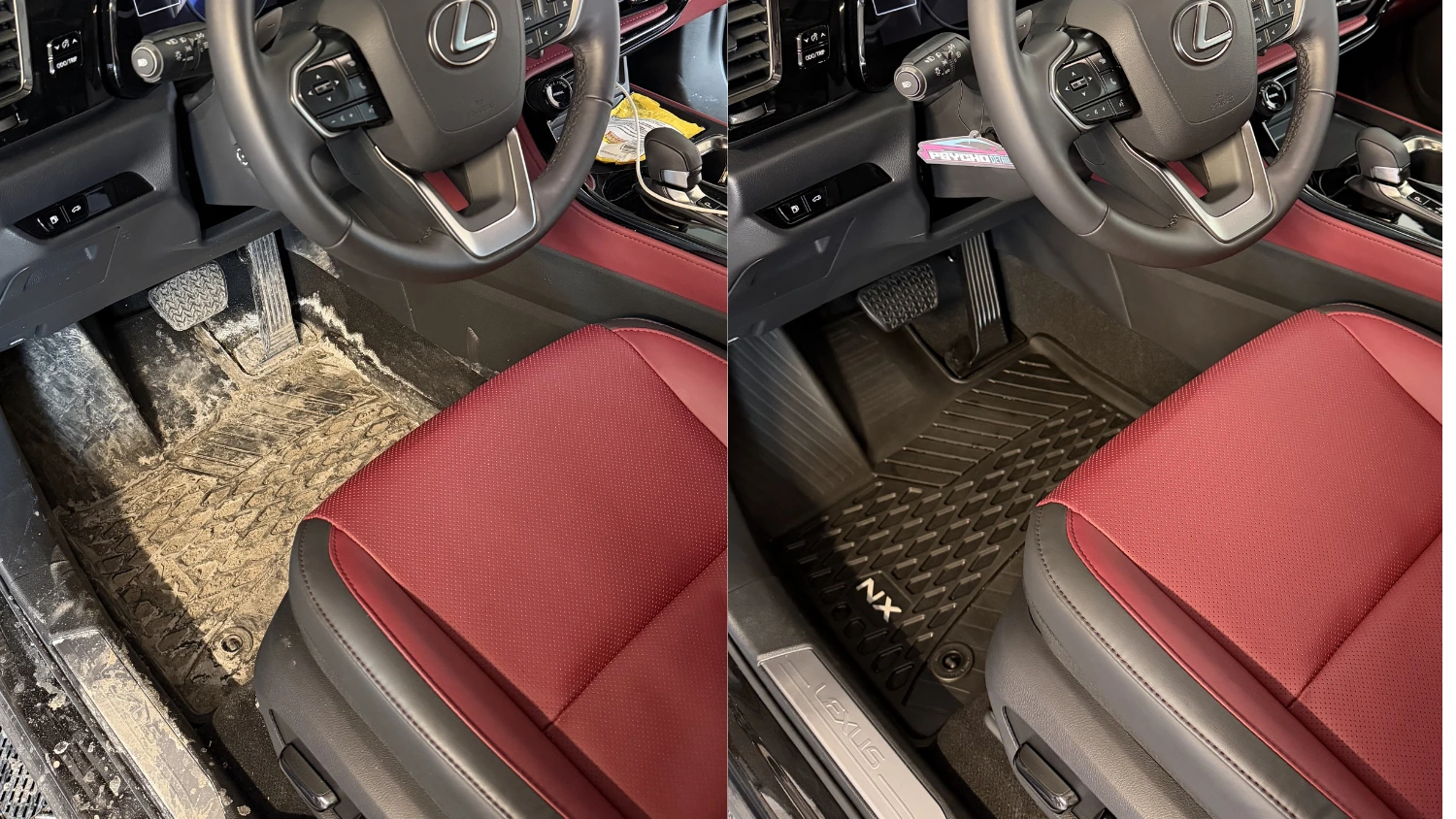
This is the most urgent step and the one most drivers overlook. Quebec road salt does not just sit on your carpet — it crystallizes in the fibers and bonds to the backing material over time. A vacuum removes surface dirt. It does not remove calcium chloride that has penetrated the weave.
Left untreated through spring and summer, salt residue causes permanent white staining, accelerates carpet deterioration, and creates a corrosive environment inside your vehicle. Metal contact points under your seats and in your door sills are particularly vulnerable.
Professional interior detailing uses hot water extraction and enzyme treatment to fully remove salt and calcium from carpet and upholstery — the only method that actually works. This is our most-booked spring service for a reason.
A basic interior car wash at $20-30 removes surface dirt only — salt and calcium stay behind every time. After 5-6 visits through winter you have spent $100-180 and the residue is still in your carpet. A professional deep interior clean uses hot water extraction and enzyme treatment to actually remove what those washes never could. Done once properly in spring, your interior is genuinely clean — not just vacuumed.
What to look for: White residue on floor mats and carpet, stiff or crunchy carpet texture, visible calcium deposits on door sills and under seats.
Step 2 — Exterior Decontamination
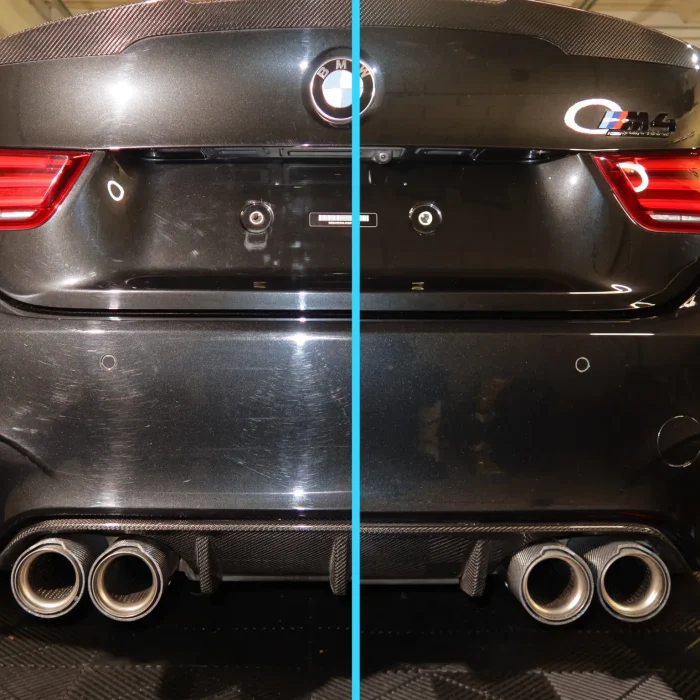
After a Quebec winter, your paint is covered in contamination that washing cannot remove. Road salt, industrial fallout, brake dust, and calcium deposits bond to your clear coat at a microscopic level. Running your finger across a washed panel and feeling roughness is a sign of bonded contamination.
The solution is clay bar decontamination — a process that physically pulls embedded contaminants from the paint surface. Without this step, applying wax or sealant locks contamination in rather than protecting clean paint.
Our exterior detailing service includes a full clay bar decontamination as a standard step. This is what separates a professional detail from a car wash — your paint is actually clean, not just rinsed.
What to look for: Paint that feels rough after washing, water spots that won't come off, dull or hazy finish despite washing regularly.
Step 3 — Paint Inspection for Winter Damage
Spring is the right time to assess your paint under proper lighting. Quebec winter driving — salt abrasion, brush car washes, improper washing of frozen panels — creates swirl marks and light scratches that compound every season. Left unaddressed, they worsen each winter.
Stand next to your car on a sunny day and look at the paint at an angle. Circular scratches in the reflection are swirl marks. Hazy or dull areas indicate oxidation. These are exactly the defects that paint correction removes permanently — before they get worse.
If you are planning to apply or renew ceramic coating this spring, paint inspection is not optional. Ceramic coating seals whatever is on your paint permanently. Correct the defects first, then protect.
What to look for: Circular scratches visible in sunlight, dull or hazy clear coat, visible scratches on horizontal panels (hood, roof, trunk).
Step 4 — Apply or Refresh Paint Protection
Once your paint is decontaminated and corrected, it needs protection before the next winter arrives. Spring is the ideal time to apply ceramic coating — the studio environment is temperature-stable, and you have the entire summer and fall for the coating to fully cure and perform before salt season returns.
If you already have a ceramic coating, spring is when your annual maintenance visit is due. A maintained coating lasts significantly longer and continues to repel road salt and water effectively.
Our ceramic coating service offers four tiers from 1 to 7 years of protection — applied in our climate-controlled Terrebonne studio using Gtechniq and CARPRO professional products.
Spring advantage: Coating applied in spring cures through summer driving conditions — the best possible start for long-term durability.
Step 5 — Full Detail If Both Interior and Exterior Need Work
If your car needs both interior salt removal and exterior decontamination — which most Quebec vehicles do after winter — a full detail is the most efficient way to handle everything in one appointment. Interior and exterior are done together, saving time compared to booking them separately.
A full detail also gives us the opportunity to assess paint condition and ceramic coating needs during the same visit. Many clients combine a full detail with ceramic coating or paint correction as a complete spring reset — everything done in one or two days, car comes back looking and performing like new.
Best for: Vehicles that haven't had professional attention since last fall, cars with both visible interior salt damage and exterior contamination, anyone preparing their vehicle for summer or considering a paint protection upgrade.
When to Book — March and April Are the Window
Spring detailing in Montreal and across the North Shore has a clear peak window: March through mid-April. After that, studio and mobile appointments fill up as the weather improves and everyone waits until the last minute.
The practical reason to book early: salt removal is most effective before the residue has had time to fully bond and stain. Every week you wait after snowmelt, the calcium chloride in your carpet is setting deeper.
Our studio is in Terrebonne and serves all of Greater Montreal, Laval, Blainville, Mascouche, Repentigny, and the North Shore. Mobile service is available for interior, exterior, and full details — no need to come to us if your schedule doesn't allow it.
Book Your Spring Detail Now
Studio in Terrebonne — mobile across Montreal, Laval, and the North Shore. Spring availability fills fast. Book now to secure your spot.
Book Your Appointment431 Rue O'Diana, Terrebonne, QC — 84 reviews 4.9 stars