Complete Guide to Ceramic Coating for Quebec Winters 2025
Quebec winters are brutal on vehicles. Indeed, road salt, freezing temps, and ice scraping hurt your paint every year. That's why ceramic coating has become essential for Quebec drivers. In this guide, we'll cover everything you need to know. Specifically, you'll learn how it works, what it costs, and why it's the best choice before snow flies.
What Is Ceramic Coating?
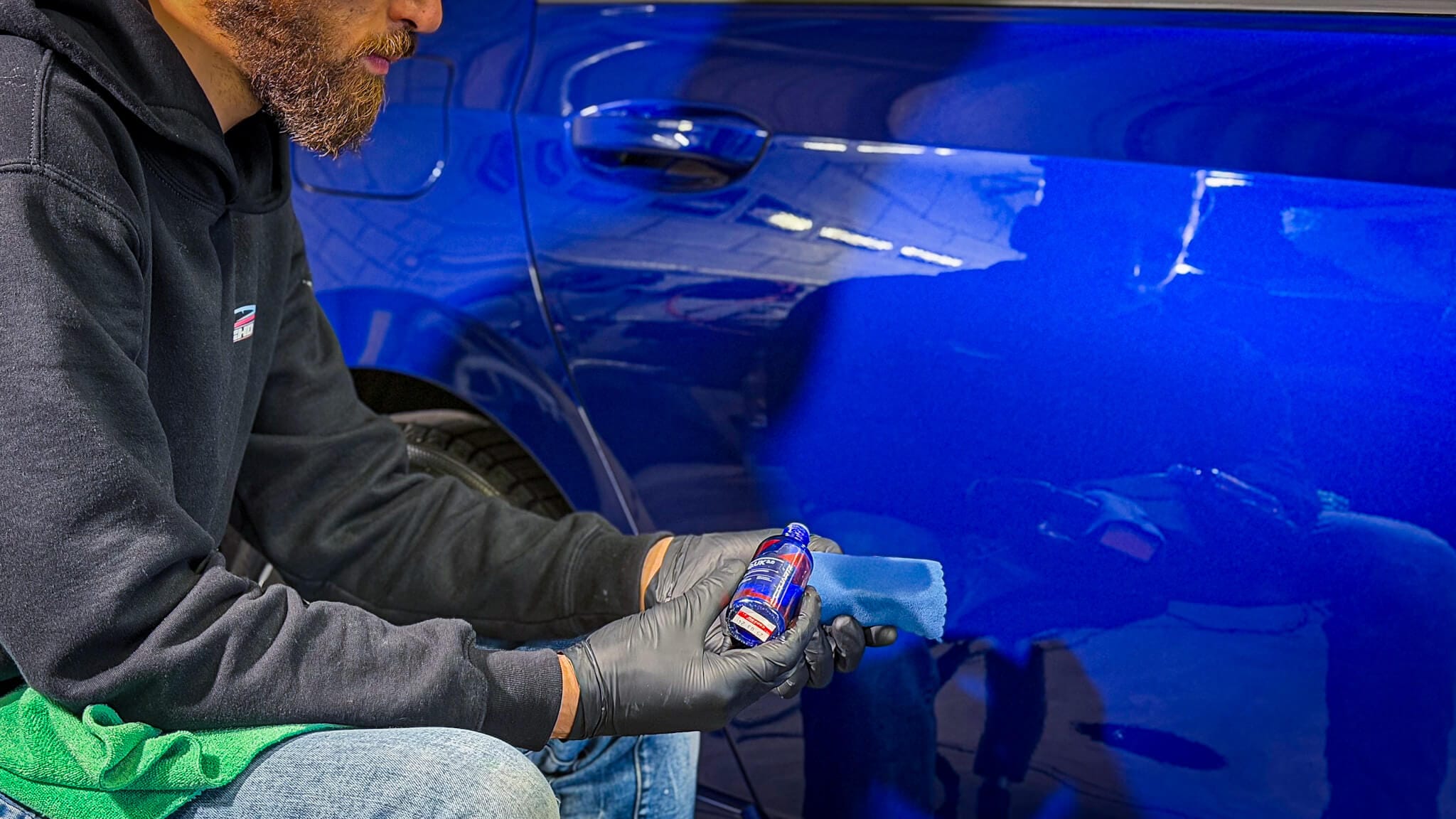
Essentially, ceramic coating is a liquid that bonds with your car's paint. As a result, it creates a lasting protective layer. Unlike wax, it won't wash away in weeks. Instead, it becomes part of your paint.
Think of it as an invisible shield. Specifically, it makes your car repel water. When water hits a coated car, it beads up and rolls off. Moreover, it takes dirt with it. This is the "self-cleaning" effect you've seen in videos.
Professional vs. Consumer Ceramic Coating Products
Importantly, not all coatings are the same. For example, store-bought products offer some protection. However, they only last 6-12 months. On the other hand, professional coatings use more SiO2 (silicon dioxide). As a result, they last 2-5+ years.
Why Quebec Winters Are Tough on Your Ceramic Coating
First, let's look at what your car faces each winter. This applies to Laval, Montreal, and the Rive-Nord region:
🧂 Road Salt: The Silent Paint Killer
Surprisingly, Quebec uses about 1.5 million tonnes of road salt each year. Additionally, this mix includes sand and chemicals. Unfortunately, it's very corrosive. When it hits your car, it attacks the clear coat fast. Over time, it creates scratches and rust. In fact, damage can show after just 2-3 winters.
❄️ Freeze-Thaw Cycles
Similarly, our area sees big temp swings. As a result, water seeps into tiny paint cracks. Then it freezes and expands. This makes the cracks bigger. The cycle repeats many times each winter. Consequently, paint damage gets worse over time.
🪨 Gravel and Road Debris
Furthermore, winter roads have plows and loose gravel. Every drive sends rocks flying at your paint. Eventually, chips expose bare metal. As a result, rust forms quickly.
How Ceramic Coating Protects Your Car in Winter
Ceramic coating offers several types of protection. Below, we explain how it helps in harsh winters:
1. The Coating Resists Road Salt Damage
Basically, the ceramic layer blocks salt from your paint. Instead of soaking in, salt sits on top. Therefore, it rinses off when you wash. As a result, you won't see stains like on bare paint.
2. Hydrophobic Properties Keep You Cleaner
Notably, the water-beading effect is useful. Snow, slush, and salt don't stick to coated cars. Instead, grime slides off easily. As a result, your car stays cleaner longer. Plus, washing takes half the time.
3. Enhanced Scratch Resistance
Professional coatings rate 9H-10H on the hardness scale. Clearly, this is harder than factory paint. Of course, no coating is fully scratch-proof. However, ceramic reduces swirl marks from washing. Additionally, it guards against snow brush scratches.
4. UV Protection Year-Round
Even winter sun fades paint. Fortunately, ceramic blocks harmful UV rays. This keeps your paint looking fresh. It's especially key for dark colors, since they fade fastest.
Ceramic Coating Cost in Quebec: What to Expect
Naturally, pricing varies by car size and paint condition. Below is what local drivers typically pay:
| Service Package | Price Range | Protection Duration |
|---|---|---|
| Entry-Level Ceramic | $500 - $800 | 1-2 years |
| Professional Multi-Layer | $1,000 - $1,800 | 3-5 years |
| Premium + Paint Correction | $2,000 - $3,500+ | 5-7+ years |
💡 Pro Tip: Paint correction fixes scratches before coating. Importantly, this step matters. Sealing in flaws defeats the purpose.
Best Time to Apply Ceramic Coating in Quebec
Certainly, timing matters here. Here's what we suggest:
Best: September - November
Overall, fall is ideal. Your coating cures fully before snow arrives. As a result, you get peak protection when you need it most.
Good: March - May
Alternatively, spring works well too. After winter, we fix any paint damage. Then, we apply fresh coating for the year ahead.
Challenging: December - February
Meanwhile, winter jobs are still possible in our heated shop. However, curing takes longer. Therefore, we suggest 24-48 hours indoors before you drive.
Frequently Asked Questions
Q: Can I use an automatic car wash?
A: Generally, we suggest touchless washes only. Brushes can cause scratches. Instead, hand wash or use a touchless system.
Q: Does ceramic coating stop rock chips?
A: Admittedly, it offers great chemical and UV protection. However, it's too thin to stop rock chips. For that, consider paint protection film (PPF) on the hood and bumper.
Q: How do I care for it in winter?
A: First, rinse often to remove salt. Also, use gentle soap and skip harsh chemicals. Although cleaning is easier, regular care extends the life.
Q: Is it worth it for older cars?
A: Absolutely! In fact, older paint needs protection most. Moreover, we can restore shine first, then seal it in.
Ready to Protect Your Vehicle This Winter?
We've protected hundreds of cars across Terrebonne, Laval, Montreal, and Rive-Nord. Additionally, our techs use only pro-grade coatings with warranties. See our results.
📞 Call for a free inspection
Book Your Appointment📍 431 Rue O'Diana, Terrebonne, QC